
National child safety training for early learning: who needs it, when, and how to keep track
The national child safety reforms that started on 27 February 2026 made child safety training mandatory across early childhood education and care. Here's what services need to know.
Who has to do it
Everyone working or volunteering at the service, whether or not they work directly with children:
people with management or control of the service
nominated supervisors and people in day-to-day charge
educators and other staff, such as cooks, cleaners and administrators
family day care educators and coordinators
volunteers and students
Foundation training deadlines
Existing staff: the deadline was 27 August 2026. Anyone who missed it needs to complete it now.
New staff: within 14 days of starting, or before they work directly with children, whichever comes first.
Refresh: every 2 years.
Advanced training: match the courses to the role
Staff who work directly with children need advanced courses 3 and 4. Nominated supervisors and people in day-to-day charge also need course 5. People with management or control need course 5. Check the official course matrix for the person’s actual role.
For a relevant role held before 30 September 2026, the advanced deadline is 31 March 2027. For a relevant role started on or after 30 September 2026, completion is required within three months of that start date.
Where
The training is free and only available on Geccko, the Australian Government's online learning platform for the sector. Each person needs their own Geccko account with a personal email address. Victorian services should also check the state's PROTECT mandatory reporting module.
Keeping the records straight
For each person, keep:
the completion date and certificate (in secure storage, not email)
the 2-year refresh date
the 14-day deadline for every new starter
the advanced courses required for their role, completion evidence and applicable deadline
the applicable National Worker Register entry, with foundation and advanced training recorded separately; retain evidence for people with management or control who perform no other role and are outside that register
A spreadsheet works until people start, leave and renew at different times. That's when certificates go missing and deadlines slip.
How EJN-HR helps
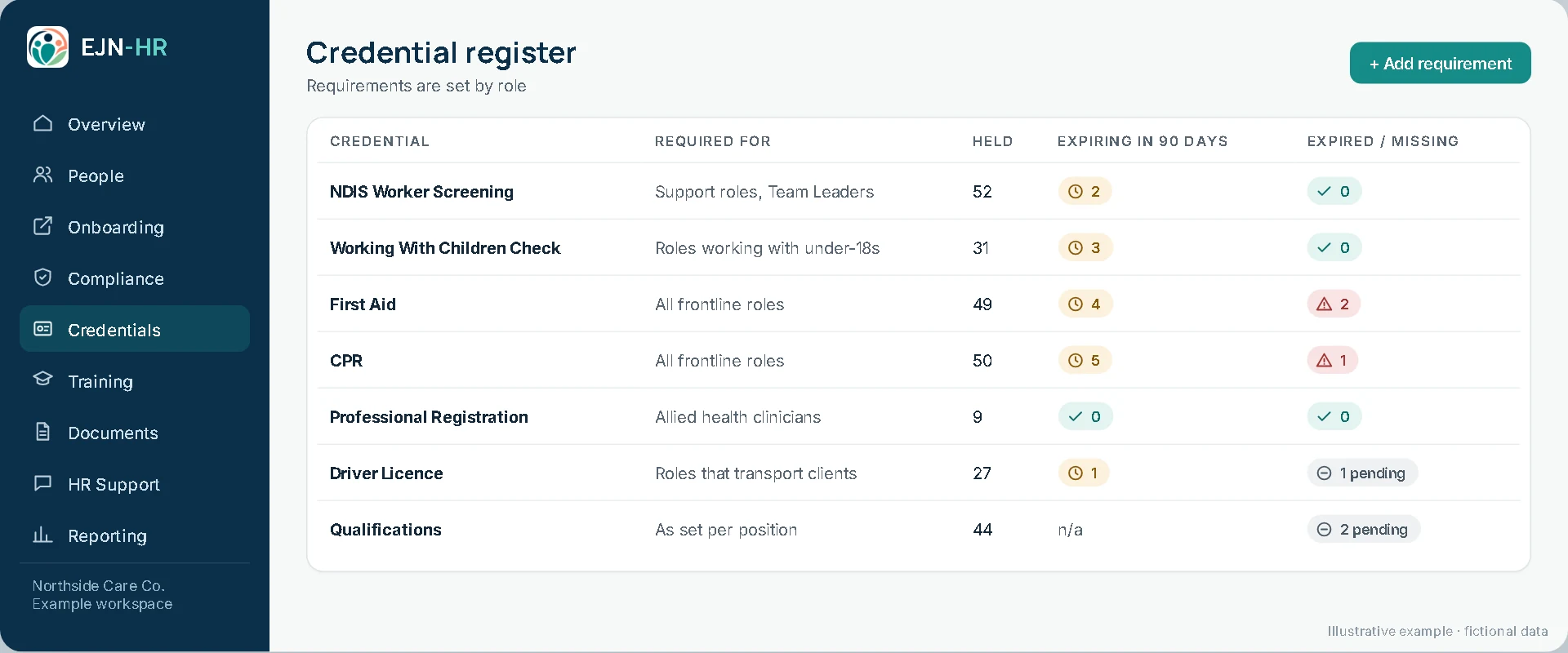
EJN-HR tracks every educator's child safety training, Working with Children Check, first aid and qualifications, with reminders before anything lapses. Download our free ECEC Child Safety Compliance Checklist, or Book your free HR review.
Child safety training questions
Does foundation training replace advanced training?
No. Check the course matrix and keep separate completion evidence for the courses required for each person’s role.
Does another provider’s course replace Geccko?
No. The mandatory national training is delivered through Geccko. Other learning can support practice but does not replace it.
Official source checked 15 October 2026
Department of Education: national child safety training provides the role matrix, deadlines and record requirements.
Related reading
Not sure where your business stands? Get an HR health check, see plans and pricing, or book your free HR review.
General information only, current at October 2026. Check education.gov.au and your state regulator for current requirements.