

Employment and compliance changes in 2025–26: what small employers and care providers need to know
A lot has changed in the past year. Here's a plain-English round-up of the changes most likely to affect small employers and care providers, with links to the official sources. *Updated October 2026.*
For every employer
- Payday super (from 1 July 2026). Employers must now pay superannuation at the same time as wages, rather than quarterly. Contributions generally need to reach the employee's fund within 7 business days of payday. The ATO's Small Business Superannuation Clearing House closed on 1 July 2026, so check how your payroll software now pays super. (Source: ato.gov.au)
- Minimum wages (from 1 July 2026). The Fair Work Commission's Annual Wage Review increased the national minimum wage and modern award minimum rates from the first full pay period on or after 1 July 2026. Check your rates with the Fair Work Ombudsman's pay calculator. (Source: fairwork.gov.au)
- Psychological health (Victoria, from 1 December 2025). Victoria's Occupational Health and Safety (Psychological Health) Regulations require employers to identify and control psychosocial hazards such as bullying, aggression, high job demands and exposure to trauma, just as they would physical hazards. (Source: WorkSafe Victoria)
Early learning and OSHC
- National child safety reforms (from 27 February 2026). Everyone working or volunteering in a service must complete the national child safety training on Geccko. Existing staff were due by 27 August 2026, and new staff have 14 days from starting (or less, if they work directly with children sooner). The National Early Childhood Worker Register also started. (Source: education.gov.au)
- Devices and images. Services need a safe-use-of-digital-technology policy (since 1 September 2025), and centre-based services may only use service-supplied devices for images of children (since 27 February 2026). (Source: ACECQA)
- Victoria: reportable conduct. From 23 February 2026, allegations of reportable conduct go to the Social Services Regulator, not the Commission for Children and Young People. (Source: ccyp.vic.gov.au)
Aged care
- The Aged Care Act 2024 (from 1 November 2025) introduced a Statement of Rights, strengthened Quality Standards and the Support at Home program. (Source: health.gov.au)
Disability, TAC and community services (Victoria)
- Social Services Regulator registration (from 1 July 2025). Disability services funded by DFFH, the TAC or WorkSafe must be registered with the Social Services Regulator and meet the Social Service Standards. The TAC updated its provider registration requirements to match. (Sources: vic.gov.au, tac.vic.gov.au)
What to do now
- Check that your payroll pays super with every pay run.
- Update pay rates and check your award classifications.
- Add psychosocial hazards to your risk assessment.
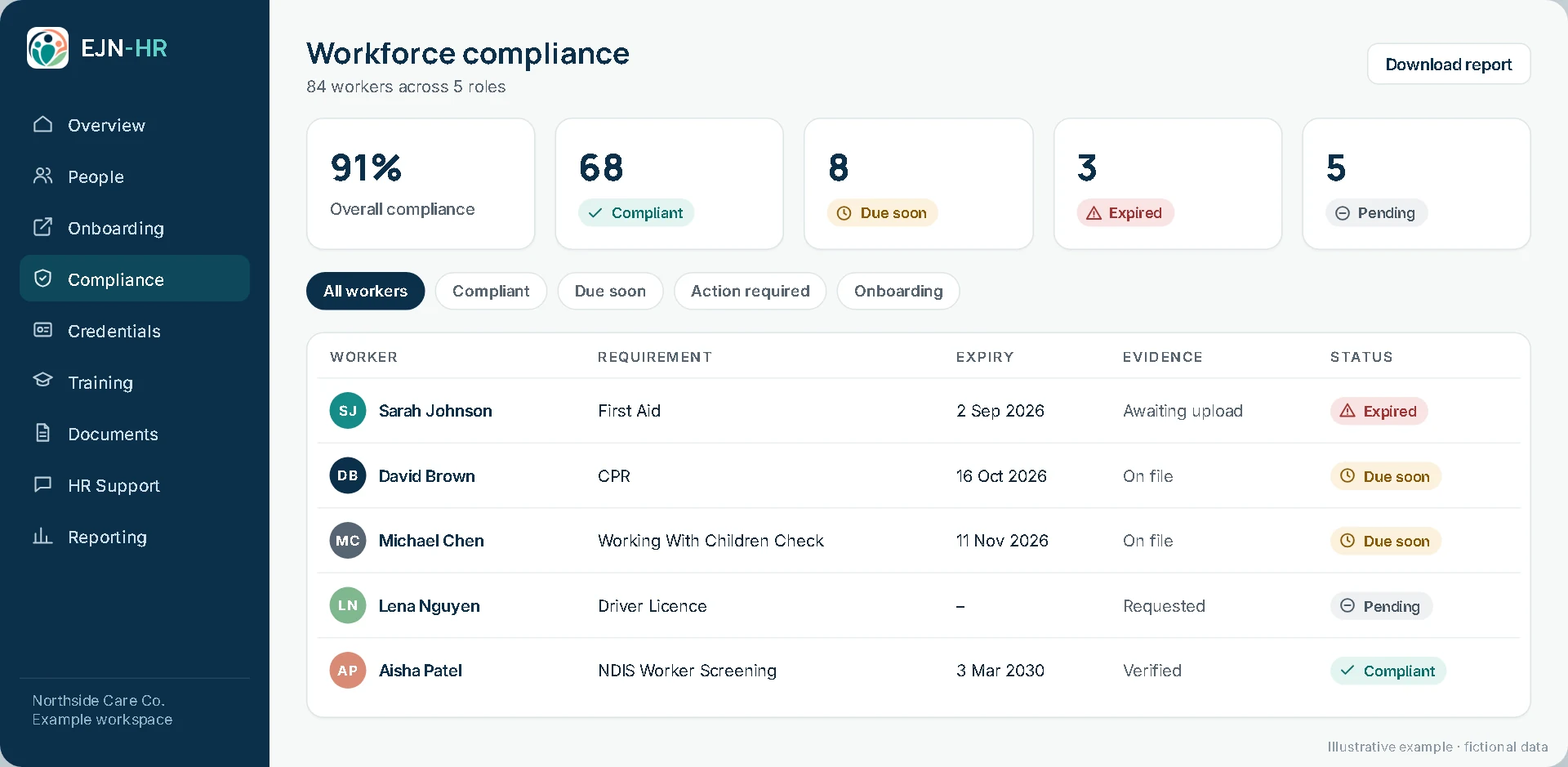
- Check every worker's training and checks against your sector's requirements, with expiry dates recorded.
EJN-HR tracks worker checks, training and onboarding for small employers and care providers. Book your free HR review.
Related reading
- Victoria's psychological health regulations: a practical guide for small employers
- TAC attendant care workers: the training you must keep current
- HR health check
- HR policies and contracts
- Outsourced HR for small businesses
Not sure where your business stands? Get an HR health check, see plans and pricing, or book your free HR review.
General information only, current at October 2026. It isn't legal, payroll or tax advice; check the official sources for your circumstances.